
California Farmhouse · Chapter III
When Van Gogh Entered the Pantry
An old staircase, two mismatched antique doors, and an unexpected room of blossoms.
Return to the project book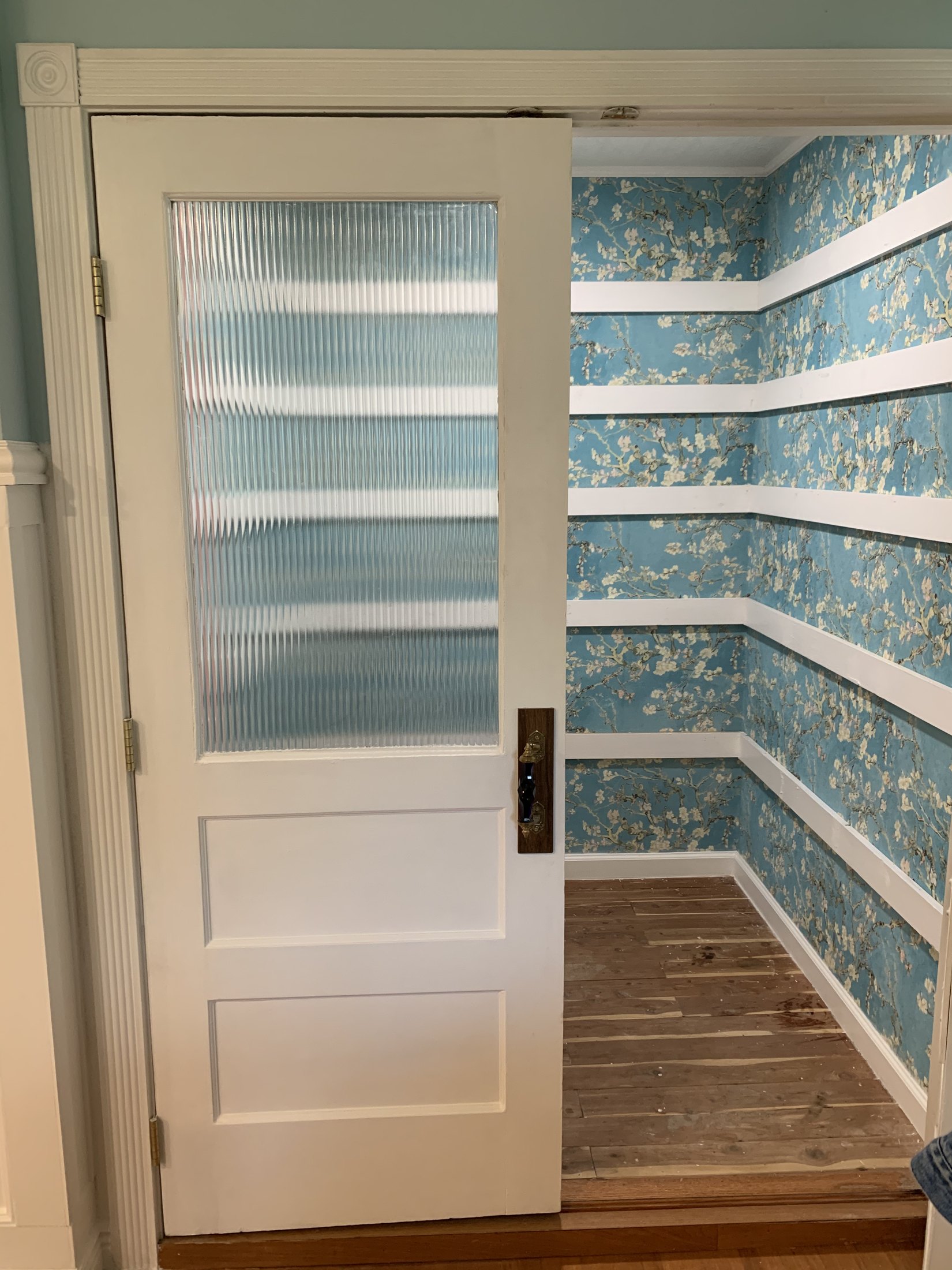
A pantry does not usually begin with a staircase.
In the California farmhouse, this space had once been an opening to stairs leading into the garage. Reclaiming that obsolete passage gave the small house something it needed far more: a generous walk-in pantry.
Practical storage was the reason for the change. But practicality was only the beginning of the story.
Two Doors, One House
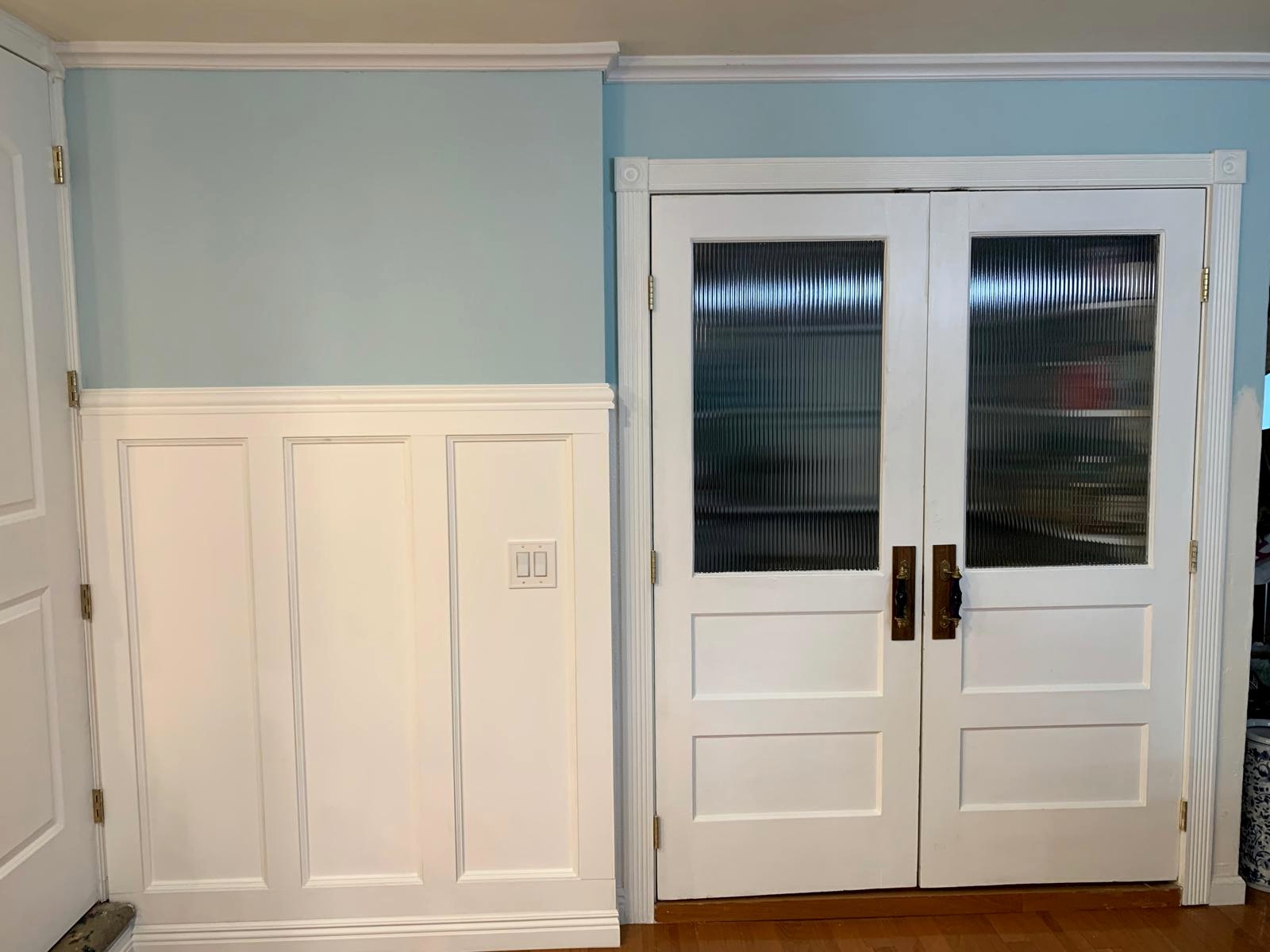
The pantry entrance offered an opportunity to return a little history to the architecture. I sourced two antique doors from the same old house, but they had never been a pair. They came from different rooms and were different sizes.
Rather than searching for a perfectly matched new set, I altered them so that they could finally live together. The proportions had to be reconciled and the surrounding millwork had to make the doors feel deliberate—not like salvaged objects added after the fact, but like working parts of this house.
Behind the Doors
Then comes the surprise. Beyond the white doors, the practical pantry gives way to an unexpected field of blue.
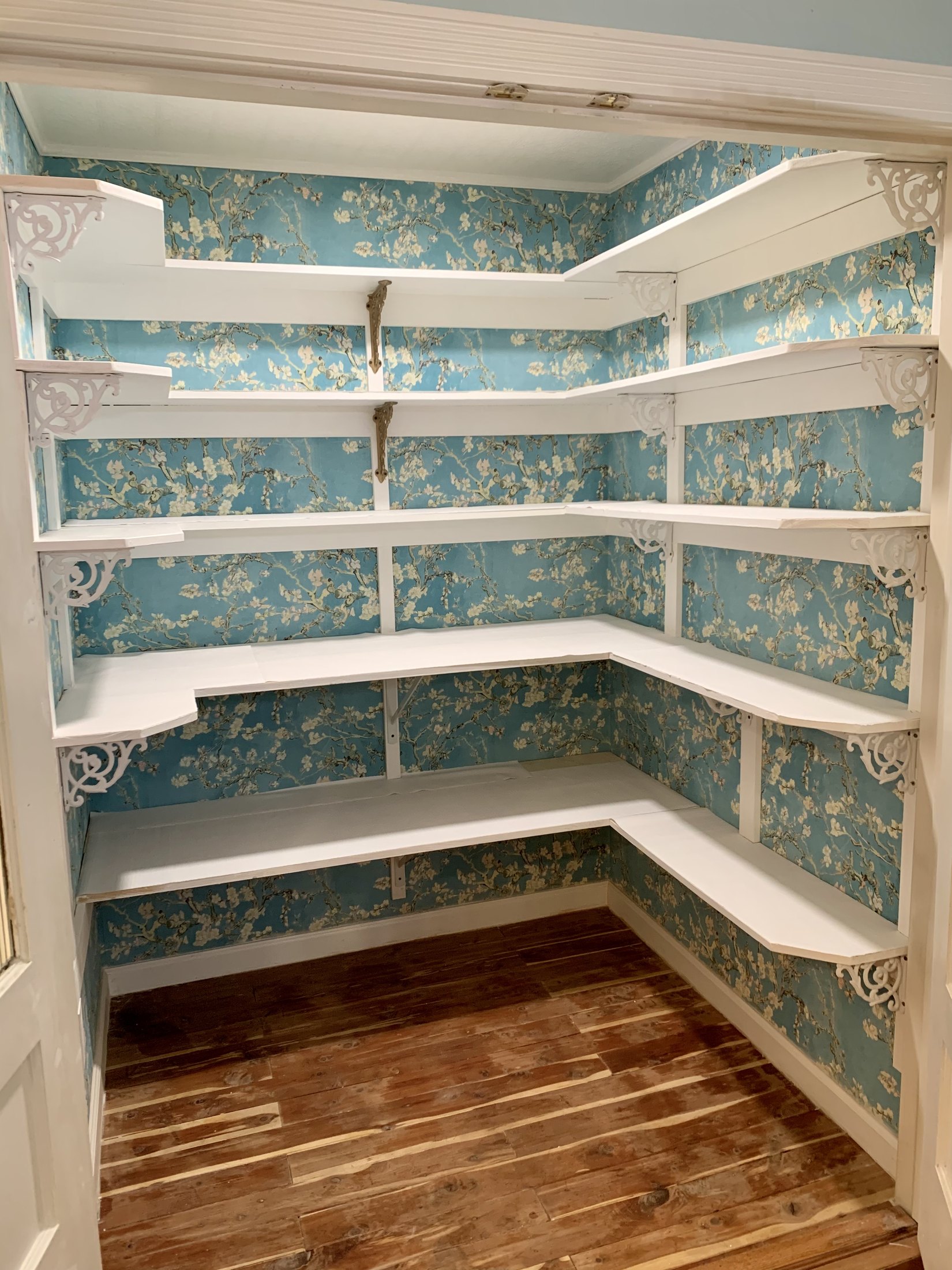
The walls were wrapped in a richly textured reproduction of Vincent van Gogh’s Almond Blossom, sourced from the Van Gogh Museum in the Netherlands. It was not selected simply because it coordinated with the room. The image brought a particular place, history, and story of its own.
Overhead, textured wallpaper gave the ceiling the character of old pressed tin. A cedar floor added warmth underfoot, completing the little room with another natural material.
“A room becomes more interesting when the things within it have traveled a little, too.”
Sourced Beyond the Expected
Creating a personal interior sometimes means looking farther than the nearest showroom. A distinctive material does not have to be extravagant, but it should contribute something more than color alone.
The shelves would have worked against ordinary painted walls. The groceries would have fit just as well. There was no practical requirement for the pantry to feel memorable.
Utility was necessary. The magic was not. We chose both.