
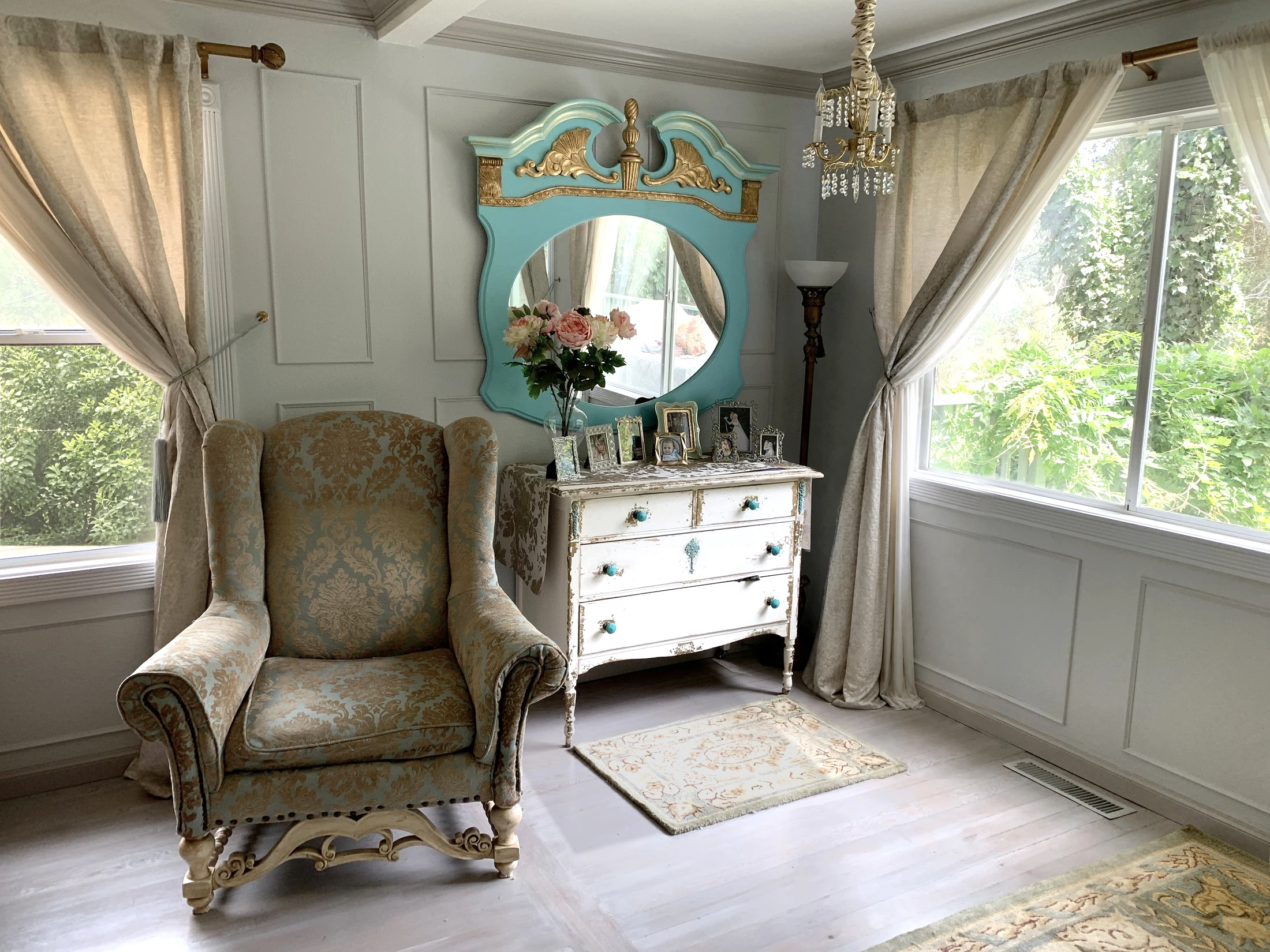
California Farmhouse · Chapter VII
The Living Room: Building Character Instead of Buying It
How original hardwood, hand-built architectural detail, a Jøtul stove, and reinvented furniture gave a plain California farmhouse living room its character.
Return to the project bookThere was nothing particularly wrong with this room when I began. There simply was not much for the eye to remember.
Walking through the kitchen brought us into the family living room, with a sliding door opening to the large porch. The room needed to be comfortable enough for everyday family life, but I also wanted it to feel anchored to the 1952 house rather than furnished inside a plain box.
So I began by looking at what the room already had—and what might be hiding underneath it.
The Room Beneath the Carpet
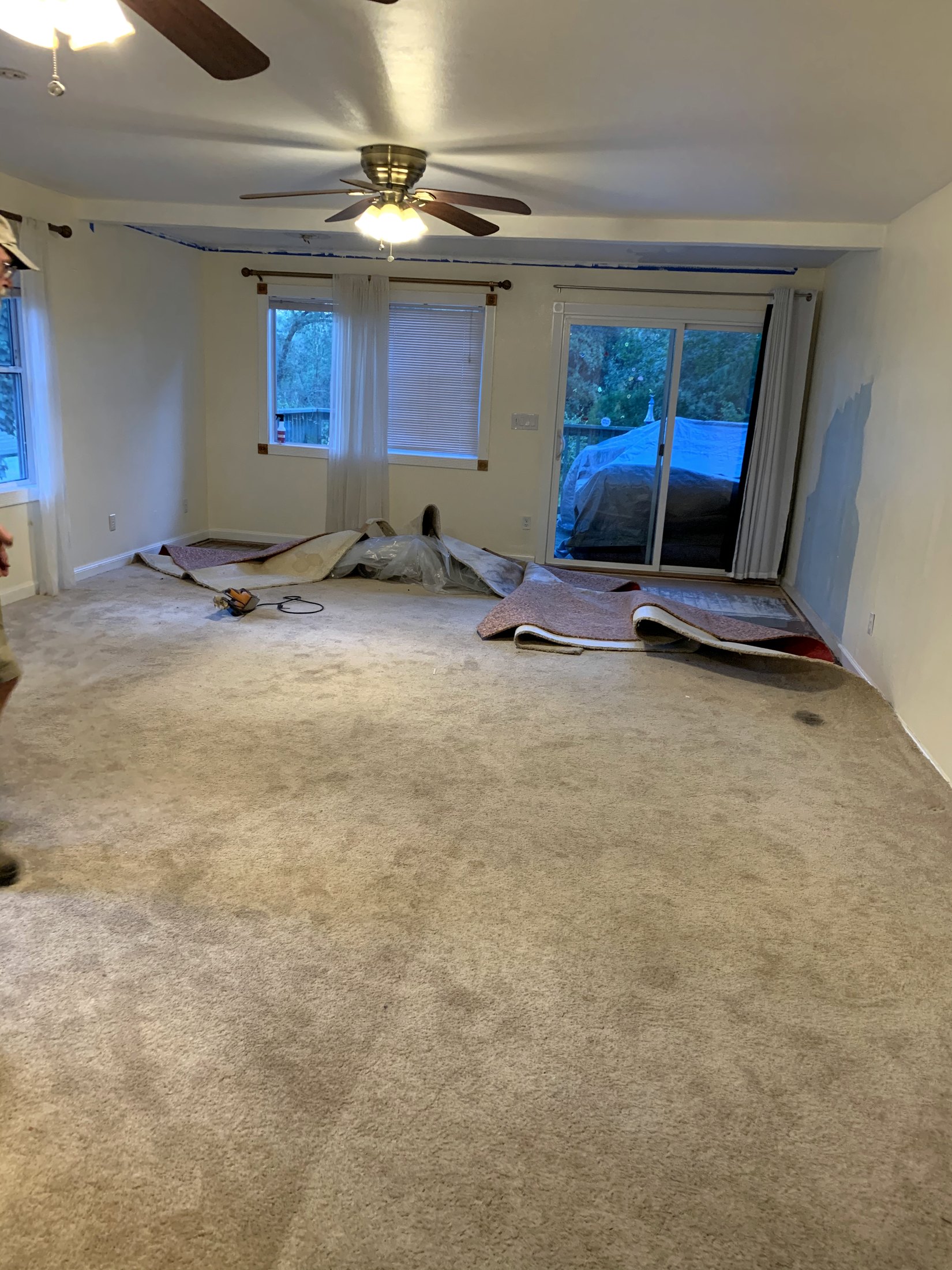
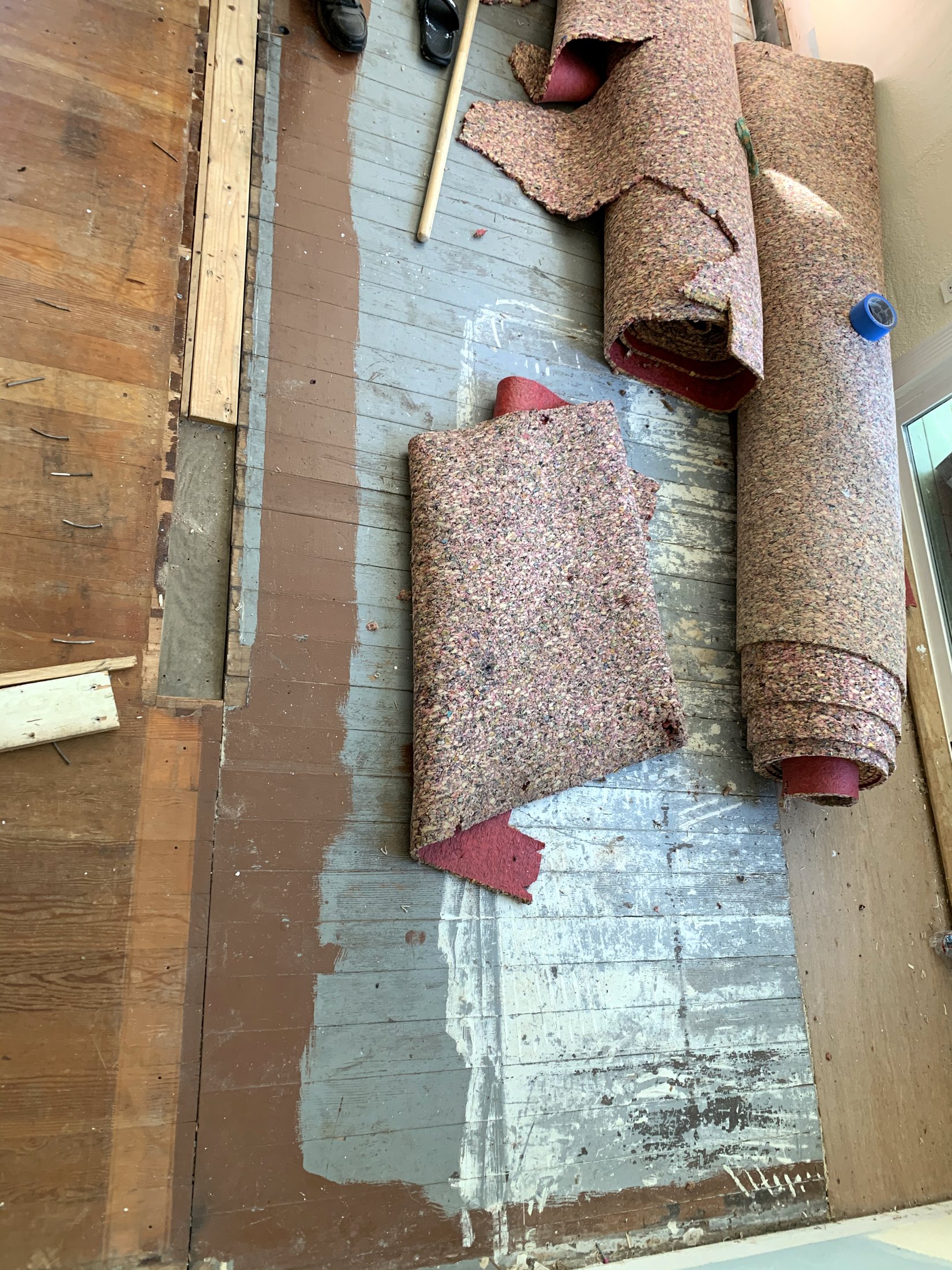
The original hardwood had been covered for years. Once exposed, it was not immediately beautiful: the boards carried differing finishes, paint, adhesive, and wear. But damage is not the same thing as worthlessness. The floor was stripped and refinished rather than covered again.
“Before deciding what a house needs, I want to understand what it already has.”
Architecture Before Furniture
I added substantial crown molding and laid out the wall molding one wall at a time. The panels had to respond to windows, openings, ceiling lines, and the views into adjoining rooms. They were not a stock pattern repeated without regard for the architecture.
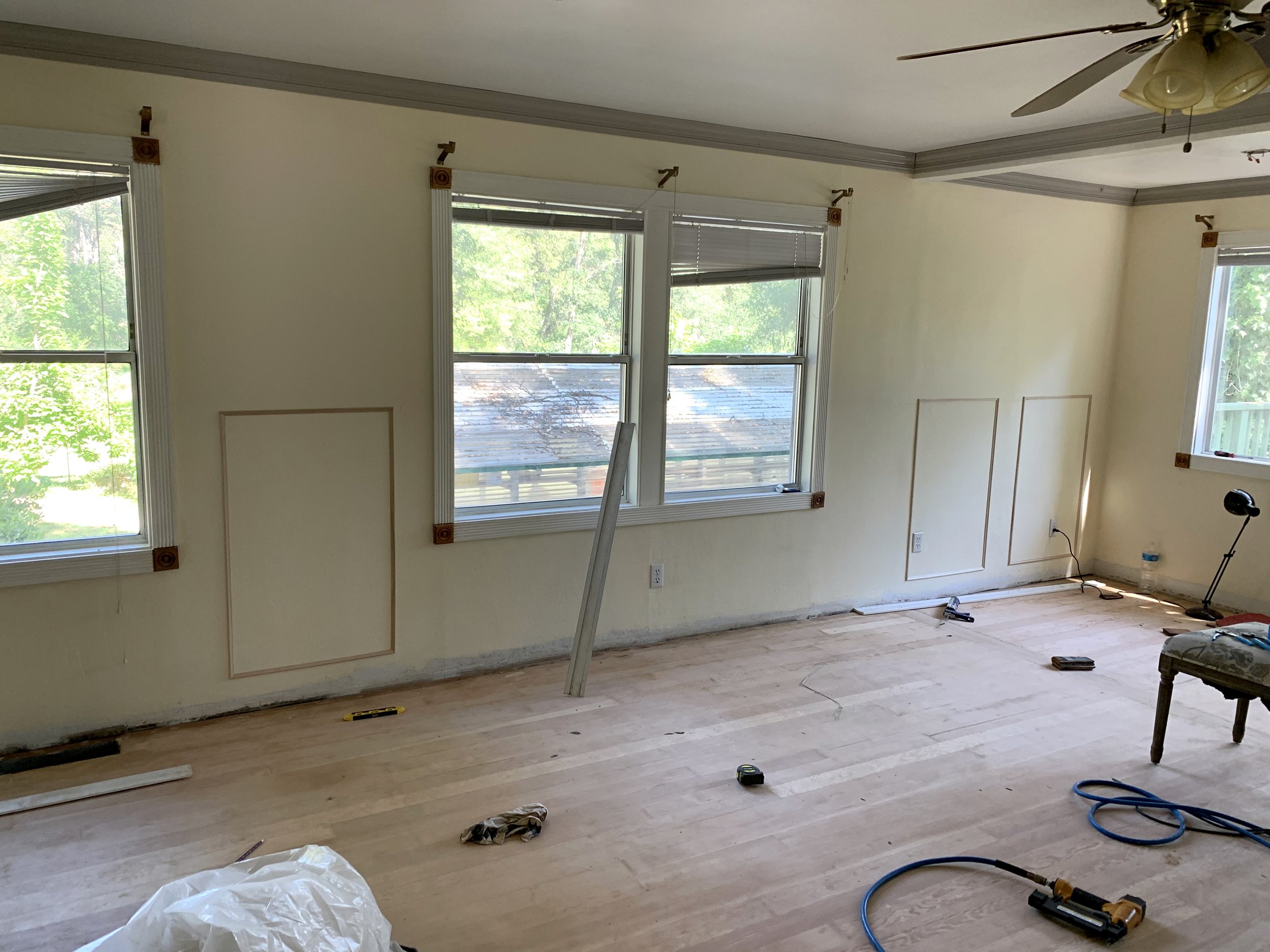
The intention was not for someone to enter and count moldings. It was to give the room proportion, rhythm, and shadow—qualities that could be felt before the furniture arrived.
A Hearth with Weight
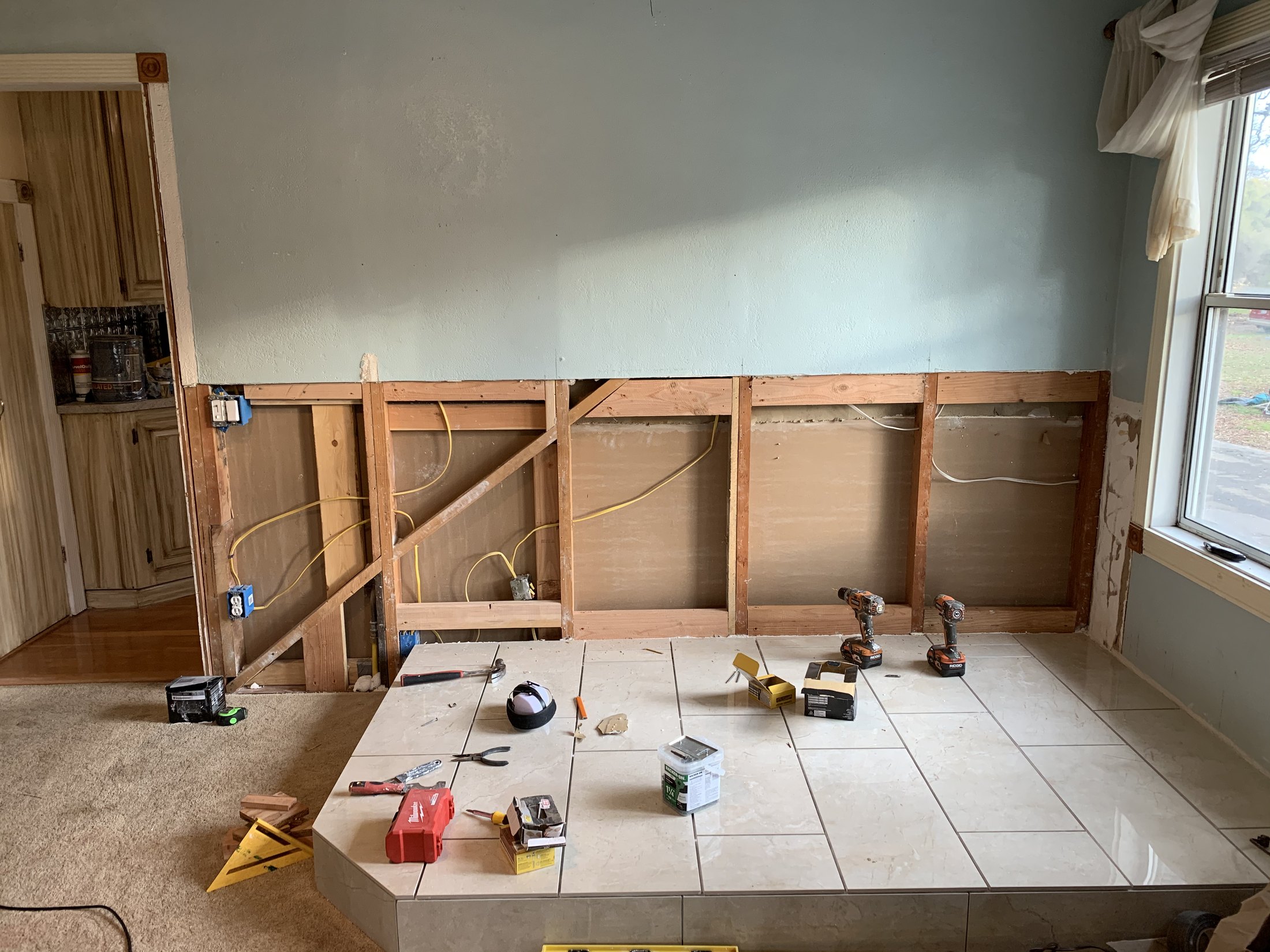
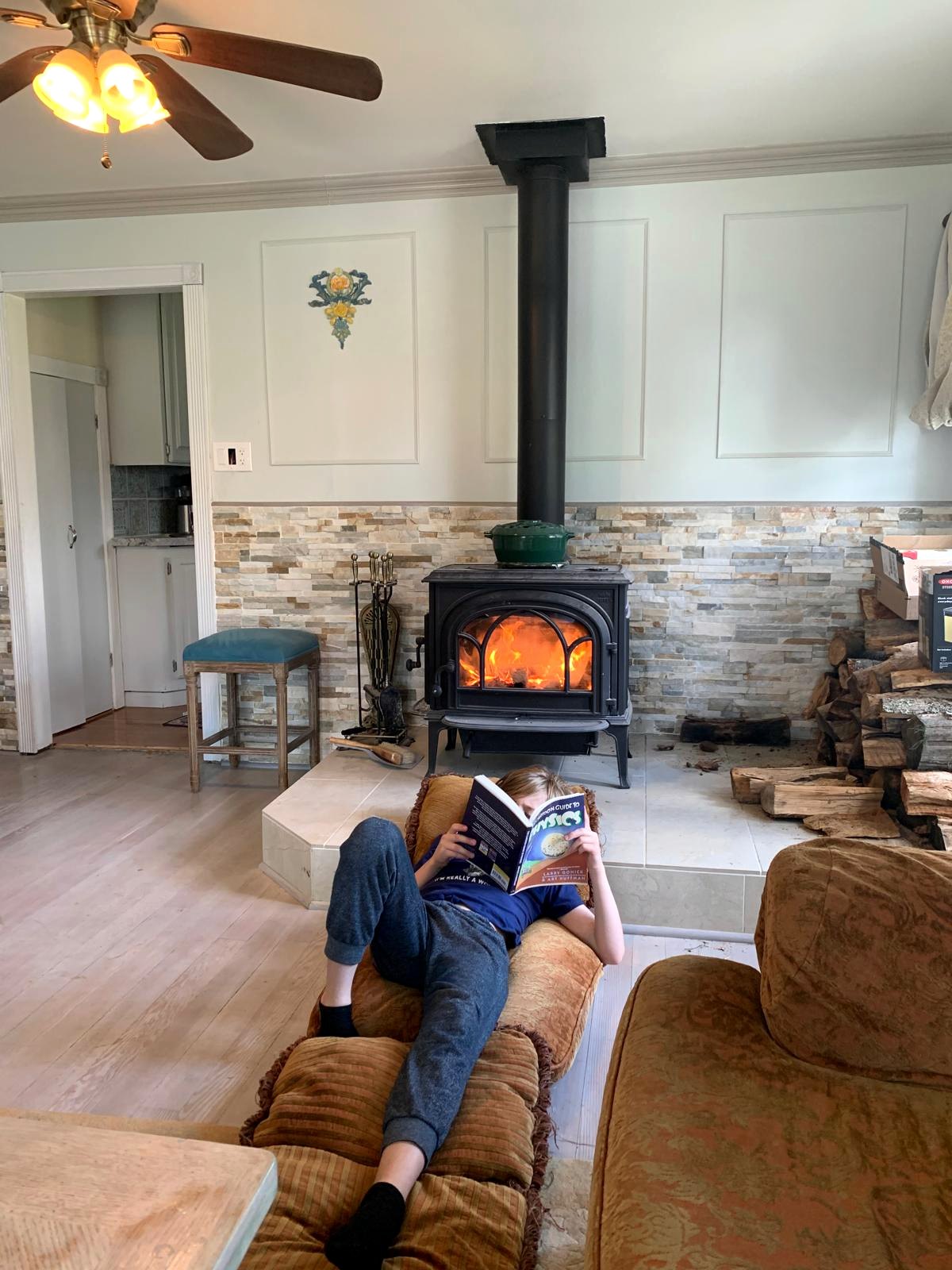
The Norwegian Jøtul stove and chimney were professionally installed. I built its raised tiled base and installed the natural ledgestone setting around it, giving the stove enough architectural weight to become part of the room rather than equipment placed against a wall.
The Piece Nobody Wanted
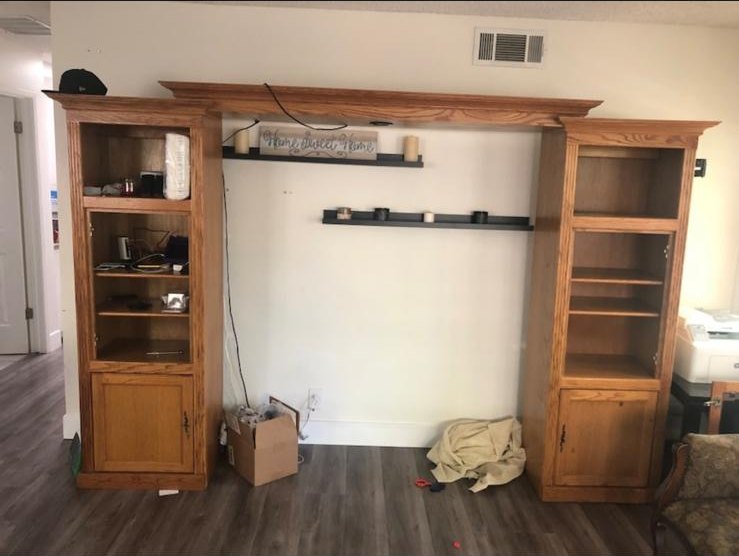
One of my favorite transformations began with an oak entertainment center I found for free. Most people would have seen an outdated piece of furniture. I saw usable material and proportions that could become part of the room.
The original piece was oak-colored, with an open center and none of the shelves or architectural integration seen in the finished room.
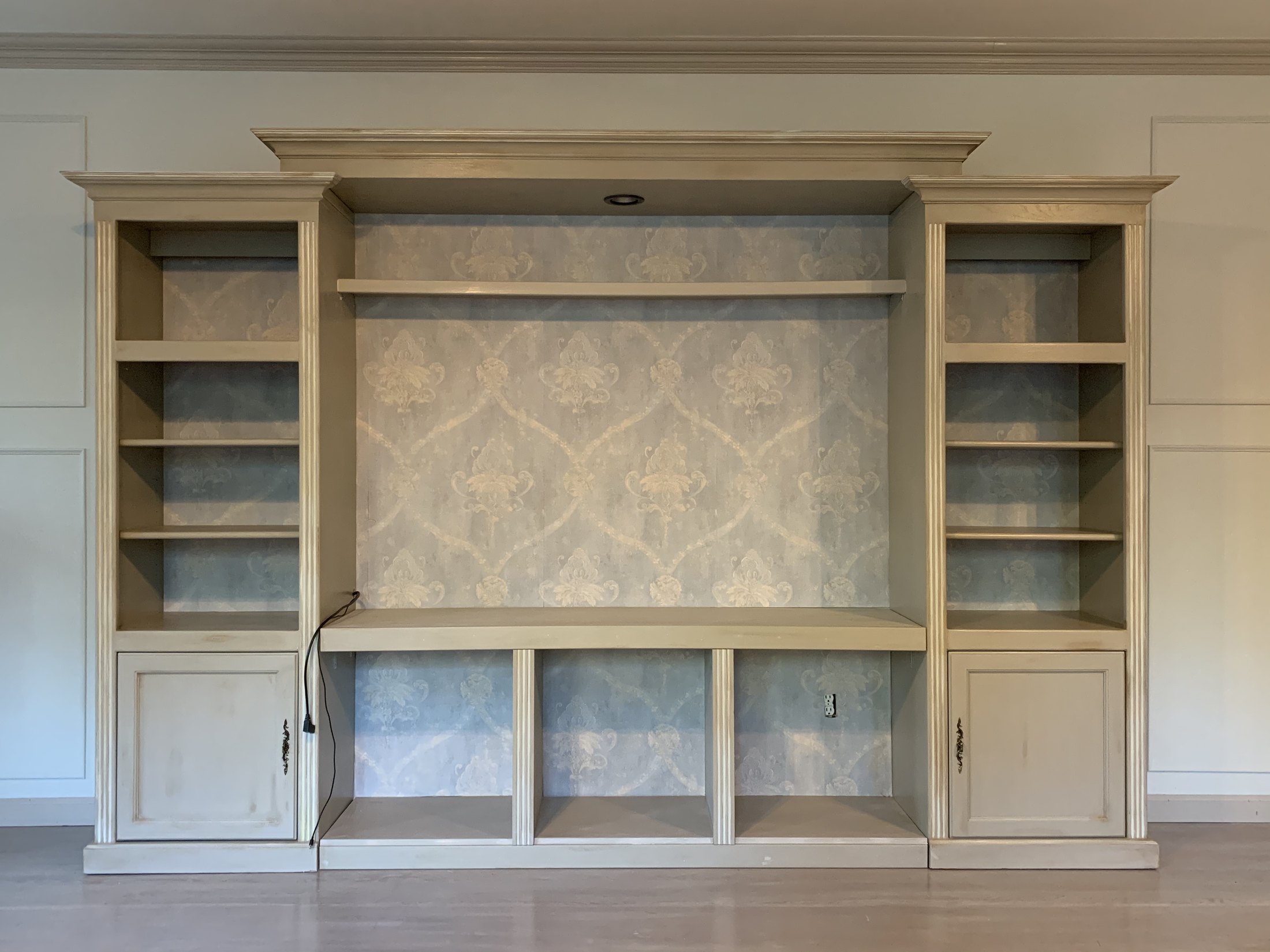
I modified it to fit the wall-paneling scheme, added useful shelving, painted it, and wallpapered the backs. The finished piece reads less like movable entertainment furniture and more like an architectural built-in.
Reinvention, Not a Matching Set
The green coffee table belongs to this room too. Its transformation is another example of the same idea: begin with a form worth keeping, then change it until it speaks the language of the room.
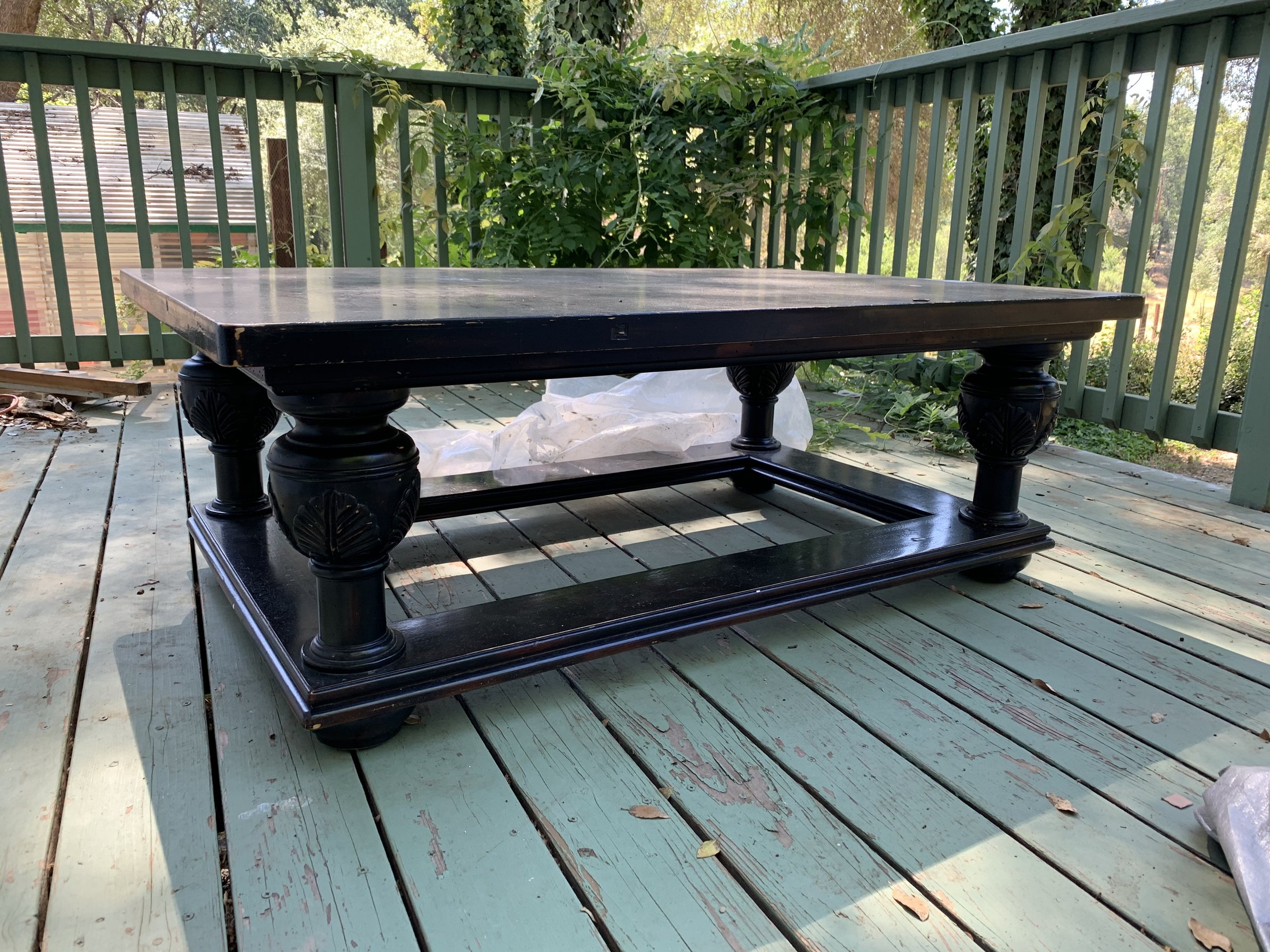
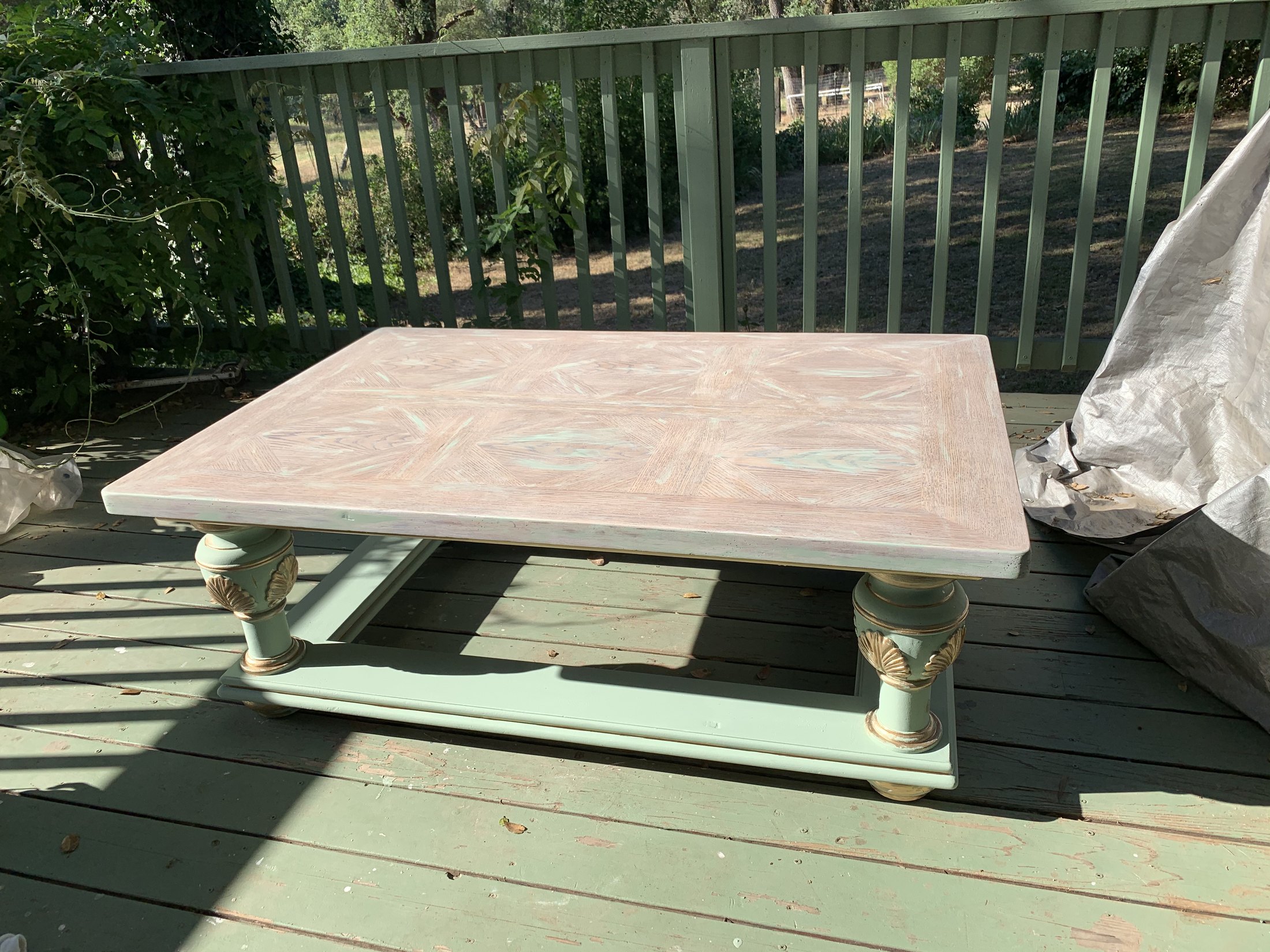
The room was not furnished around a theme, and it did not arrive as a coordinated collection. It was built, uncovered, altered, painted, upholstered, and layered over time. That is why it feels as though it belongs to this house—and to the people who lived here.