Journal · Objects & Restoration
What Else Could This Be?
An antique fireplace fan, an 1800s glass shade, and the pleasure of finding a new purpose for something old.
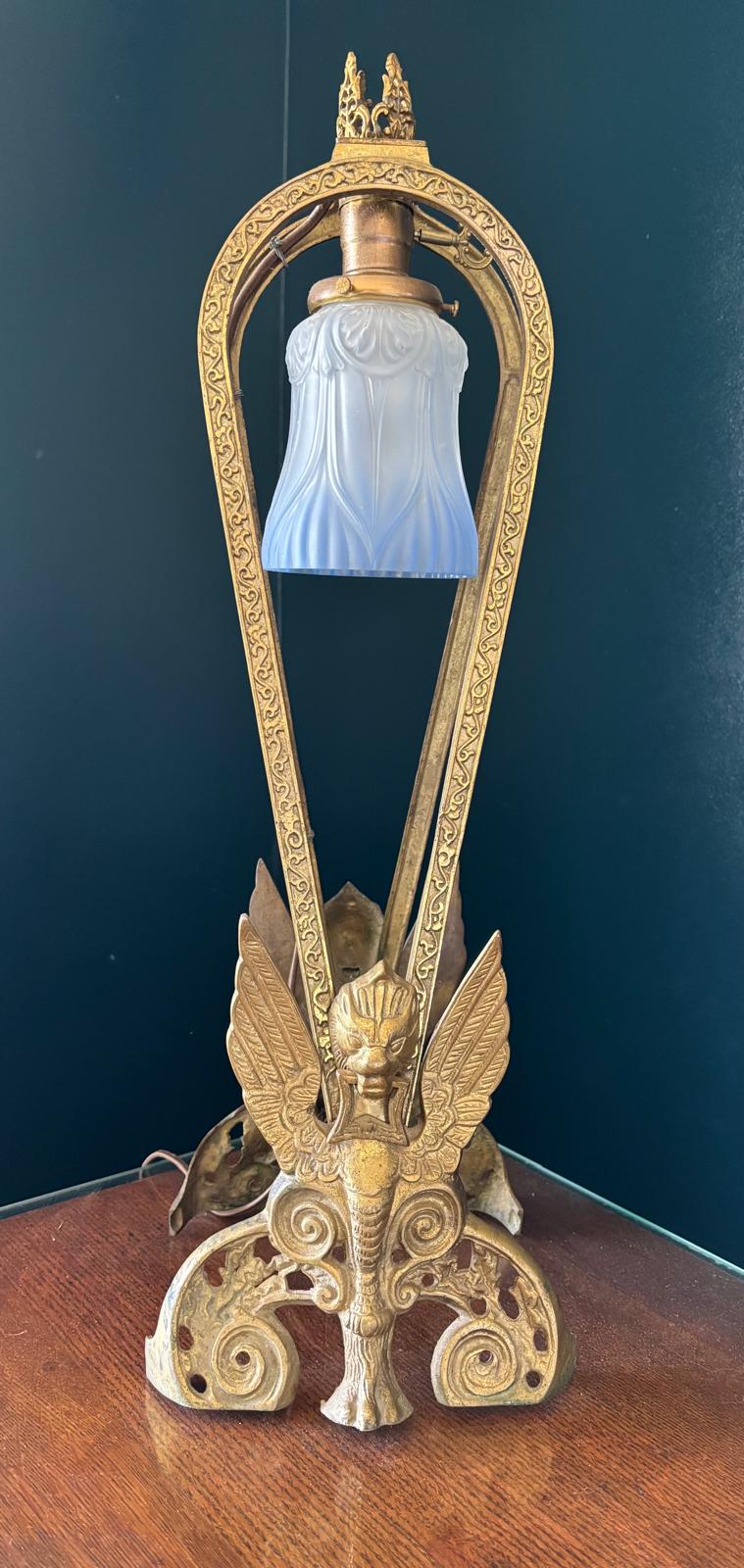
I found the brass frame at an antique flea market. I had no idea what it was.
I only knew that it was unusual, beautifully detailed, and far too interesting to leave behind. The brass had age and character. The winged figure at its base and the long ornamental frame gave it an almost architectural presence.
I thought it was cool—and I knew I had to figure out a use for it.
“When I find something unusual, I don’t only see what it was. I begin imagining what it could become.”
First Came the Object. Then Came the Explanation.
Eventually, I learned that the mysterious frame had originally been a fireplace fan. That discovery explained its tall shape and the narrow metal framework tucked inside it.
Complete examples of the same design show how it once worked: nine pierced brass panels unfolded like a peacock’s tail in front of the fire. The winged figure at the base is often described as a griffin, and the ornament at the top served as a finial and carrying handle.
See a surviving example of the original fireplace fan
Its first purpose belonged to another kind of room and another way of living. But the most beautiful part of the object—the decorative brass structure—had survived.
I could have searched for a way to return it to its original function. Instead, I kept asking the question that so often begins a Crown Equus idea:
“What else could this be?”
From Fireplace Fan to Table Light
The open frame already had the vertical presence of a lamp. It created a natural place for light while allowing the ornament, aged brass, and original construction to remain visible.
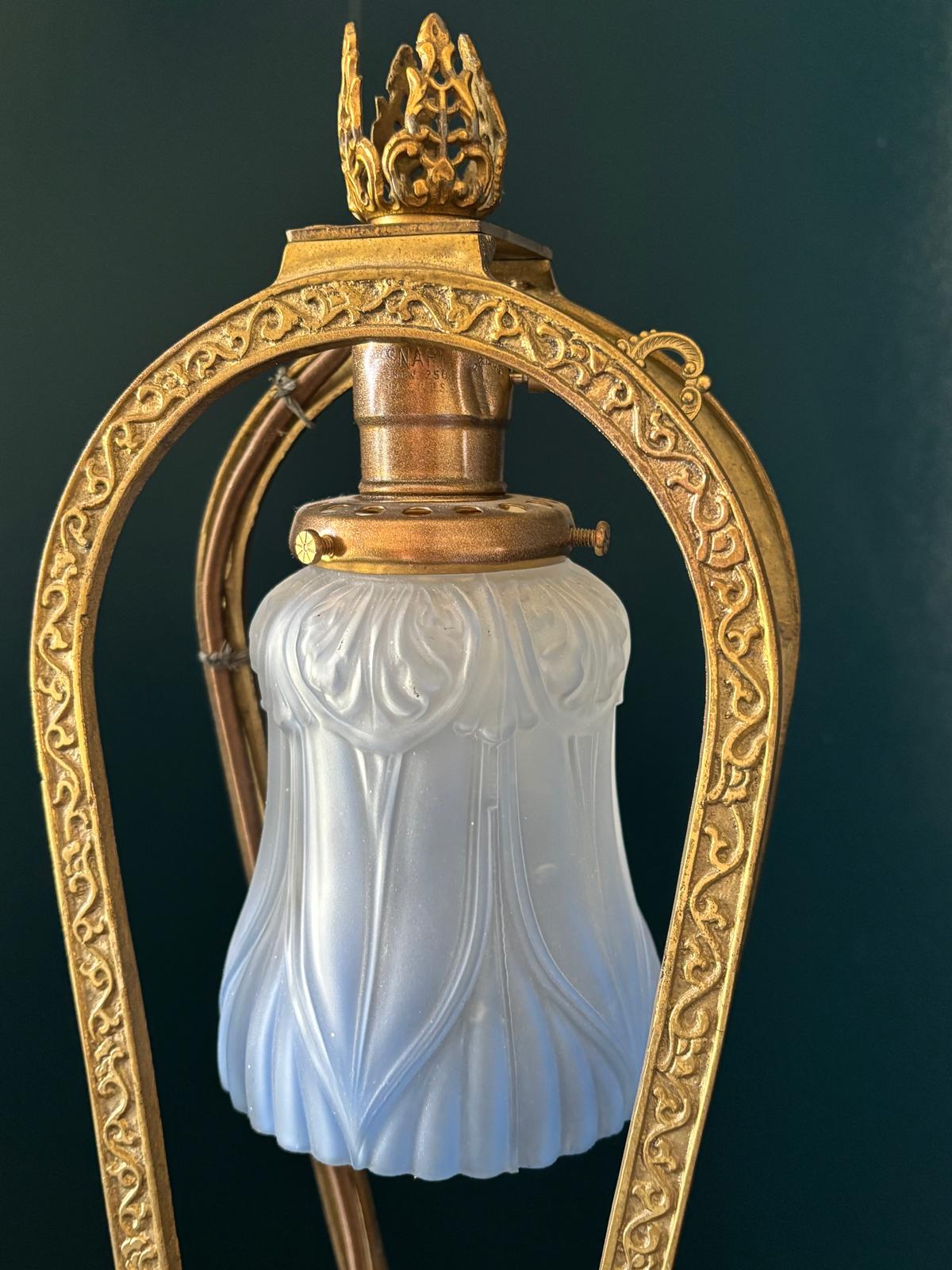
I imagined it as a table light, paired with a glass shade from the 1800s. The shade brought softness to the brass and gave the light another layer of history.
The two pieces were not originally made for each other. They came from different objects and had lived separate lives. Yet together they made sense.
The Engineer Who Brought the Idea to Life
The person who made the transformation possible was an older gentleman from whom I acquired the glass shade. Earlier in his life, he had worked as a NASA engineer and built parts for the first moon landing. In his second career, he made and rebuilt light fixtures.
I had the vision for what the fireplace fan could become. He had the knowledge and skill to bring that vision to life.
He also knew how much I loved charming details. At the top of the finished light is a little crown, and the small detail used to turn it on resembles an old key. They are easy to miss at first, but they are exactly the sort of details that make an object feel personal.
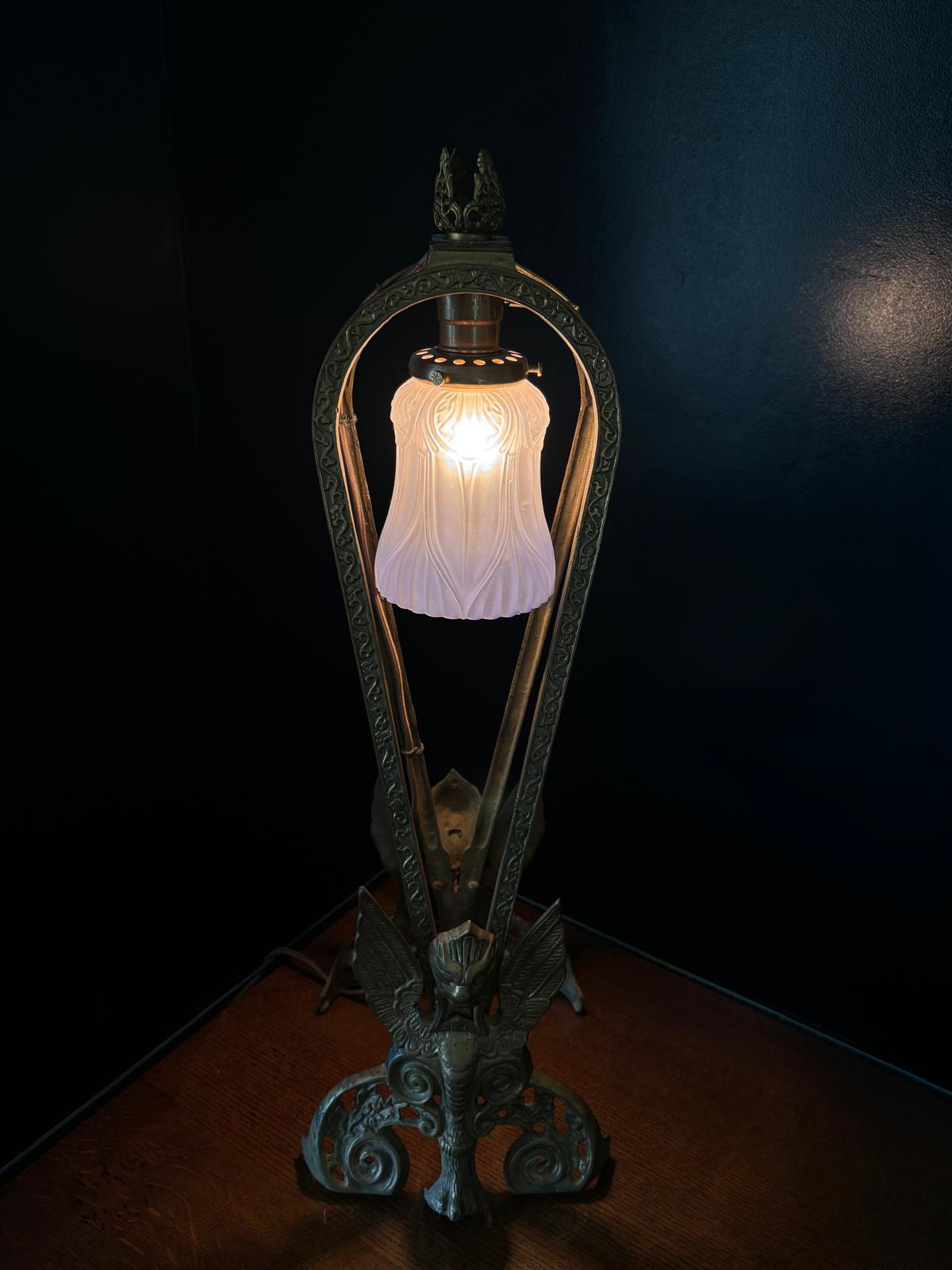
The brass gives the lamp sculptural weight. The glass diffuses the light rather than hiding the structure around it. Neither piece has to pretend to be new, and neither has to return to exactly what it was before.
Instead, they have become something functional, unusual, and impossible to order from a catalog.
I Don’t Want Everything in a Room to Be New
There is a tendency in design to treat renovation as an opportunity to remove everything old and replace it with something new. I look at things differently.
Sometimes something truly is beyond saving. Sometimes a new material or object is the right choice. But age alone is not a reason to throw something away. Neither is damage, a missing piece, or the fact that an object no longer has an obvious use.
Could an old piece of furniture become a vanity?
Could an antique light fixture be rewired?
Could a fragment of marble become an architectural feature?
Could something another person sees as incomplete become the beginning of an entirely different idea?
That kind of problem solving is one of my favorite parts of designing.
Recognizing What Is Worth Keeping
We live in an increasingly disposable world. We buy things cheaply, use them for a few years, tire of them, and replace them. Eventually, an enormous amount of it ends up in a landfill.
Our predecessors often worked very differently. They used real wood, natural stone, bronze, brass, hand-carved details, and furniture built with joinery and materials intended to survive generations.
I don’t believe we need to live in museums. A home must be comfortable, useful, and suited to modern life. But I do believe there is tremendous value in preserving craftsmanship and beautiful materials when we can.
True luxury is not simply acquiring more. Sometimes it is recognizing what is worth keeping—and having enough imagination to give it another purpose.
The Story Doesn’t Disappear
Turning the fireplace fan into a table light did not erase its earlier life. The fan is still part of its story, even though I did not know that story when I first carried it home from the flea market. The glass shade brings a history of its own.
That is what makes the finished piece meaningful to me. It is useful again, but it has not forgotten where it came from.
A home becomes more personal when it contains things that could not belong to just anyone—objects that hold memories, provoke questions, or reveal themselves slowly.
Sometimes all an overlooked object needs is someone willing to ask what else it could be.